





|
|
 Morrison Creek
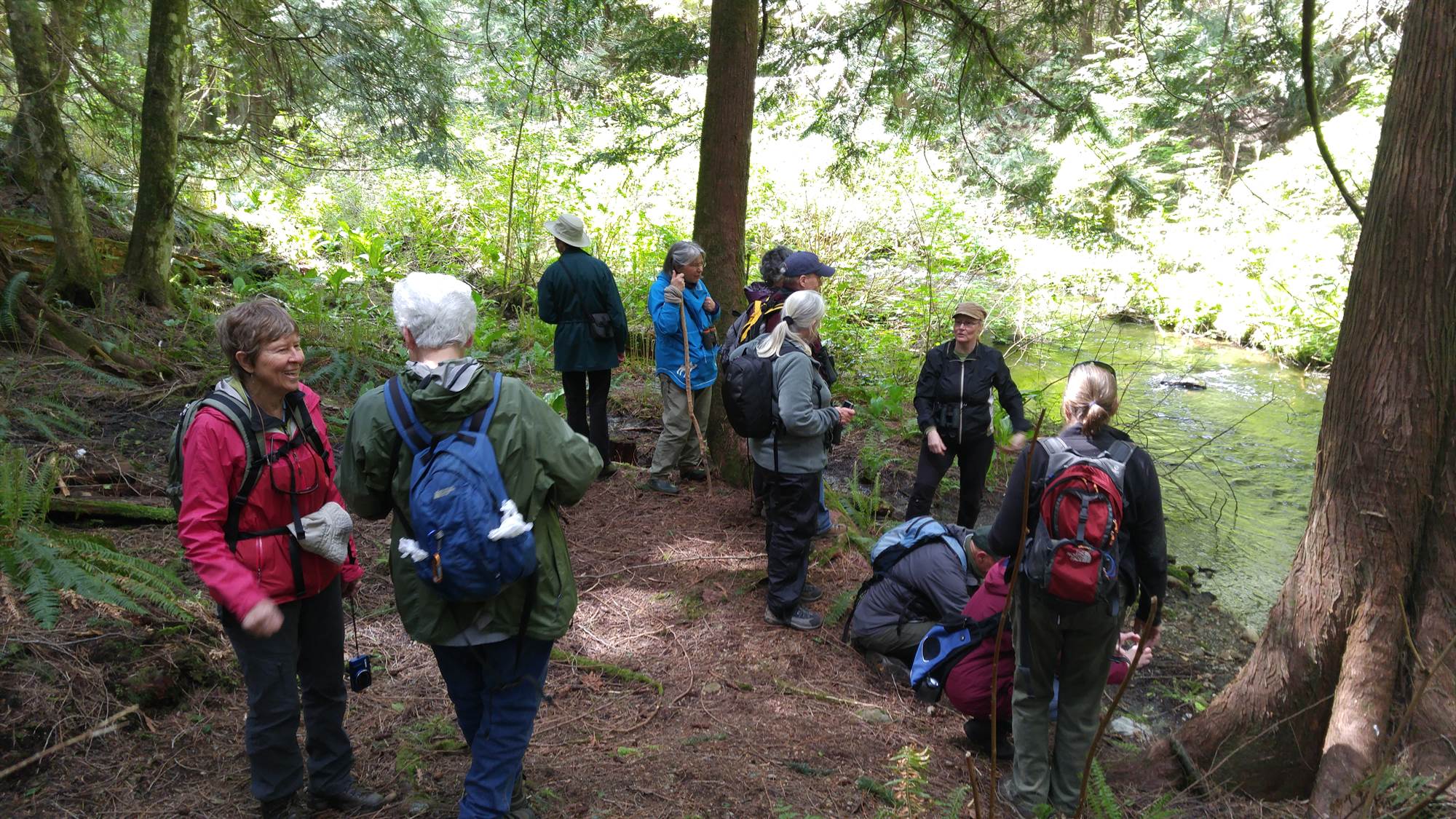
Morrison Creek is an ecologically important stream flowing into the Puntledge River at Puntledge Park in Courtenay BC on Vancouver Island.
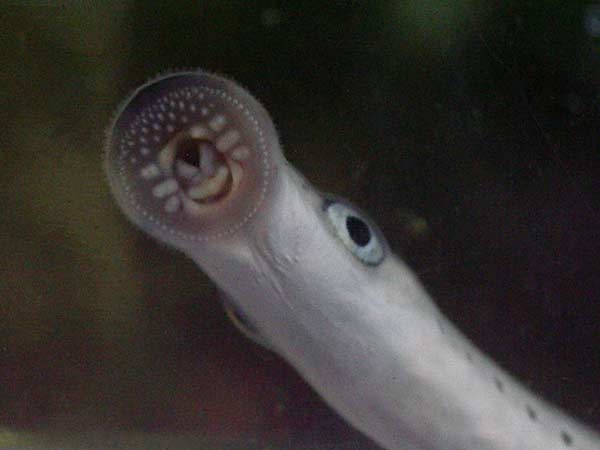
Cool, clean, year-round stream flows from springs in the headwaters make this little stream an excellent home to coho, pink, and chum salmon, as well as cutthroat and rainbow trout. Furthermore, Morrison Creek is the only place in the world where the Morrison Creek Lamprey can be found.
Mea culpa, life got ahead of me and I didn’t get around to finishing the tale of the Creek renovations. We did put some native plants in the damaged area and I am pleased to report that most of them seem to be doing ok.
One of the many 'sticks' we planted seems to be doing just fine!
Mrs Deer and the kids didn’t appreciate the ’skylight’ we provided on her island habitat and departed for the winter, for which my tulips and I thank her. I imagine they will be back once the ’skylight’ grows over again which is still a ways away.
Gap the excavator used to access the island one year ago.
While she may not have appreciated the work we did the salmon certainly seemed to. The pinks arrive first, of course, and many came before the rains really started so they had an opportunity to utilize the newly created habitat before it got so wet that everything was fish habitat. Our thanks go out once again to Jim and his helpers as their excellent work meant that we only had one escapee despite the high waters we experienced this winter that we had to rescue from the centre of the creek and reattach to the closest complex of large woody debris. I am sure that the homeowners are also extremely pleased that the ’sticks and stones’ stayed put and protected their properties from further erosion.
For those who follow our activities regularly you may have noticed that we didn’t put up the smolt fence this year. We decided that since the pink run was exceptional and the pink fry are incredibly delicate that we should give them the best possible opportunity to survive and not put up the smolt fence this year. That decision became important for all the species as the rains were incredibly bad and I noticed several areas where the eggs were washed way up on shore so there was undoubtedly a lot of damage to the fish stocks in the creek. For those that aren’t aware of the potential for disaster, salmon lay their eggs in the gravel after ‘blowing’ all the silt away and it is then essential for the eggs to remain silt free otherwise they ’suffocate’ so heavy waters with high silt loads can do a lot of damage as can walking in the creek and stirring up the sediment. The next problem area is that the eggs need to remain in one orientation as they grow so high water and strong currents can kill the developing fry by turning them over. Then in the spring the alevins hatch and they are very small and very delicate so again they need to be protected from strong currents they are not strong enough to fight and sediment, etc that can bury/suffocate them. Then they grow up and leave home, etc but all-in-all, of 2500 eggs laid only one pair of adults return to spawn. I guess what I’m trying to say is life sucks if you’re a salmon! The fence did not go to waste however as we loaned it to the Brooklyn Streamkeepers so they could check how their creek is doing.
-
-
Moving sticks and stones
-
-
Sticks and stones in place
Once we had the livestock out of the way the excavator came in and basically filled in the banks as you can see from the photos. Jim and his helpers then had the happy chore of cabling all of that mess together which they finally finished this week. Many thanks to all of them as that took longer than the rest of the work put together!
Unfortunately the vegetation wasn’t very happy having a big excavator driving over it and now looks like a wasteland. We have since planted a bunch of rye grass and clover along the edges to stop any sediment from filling up the creek and so it doesn’t look quite so naked, thanks Lindsay! Needless to say with the heat we have been having we didn’t think it would be a good time to replant some native vegetation but that is coming. We finished early with the excavator so we have some extra money to buy some good sized native plants and trees to fill in the bare spots once the weather gets a little wetter which hopefully will be fairly soon. Anyone that wants to help with the replanting process in Sep/Oct, please contact us at morrisoncreek@yahoo.ca.
-
-
Fishing for things that might go squish under an excavator track
-
-
One of many saves
Nobody wants to be slaving over a hot computer in the summertime, me included, so yes, I have been slacking off but now it is time to catch up. It has also been very busy as we set up our traps to make sure we removed all the fish and other critters big enough to catch before we brought the excavator in to place all the ’sticks and stones’ it was felt would be necessary to provide better habitat for the salmon, trout and lamprey. We pulled out around 500 coho and trout before the work started which was a bit of a surprise. The lamprey were more difficult to catch as they aren’t swimming around freely to get caught in nets so once the work started we dried up one channel of the creek which made the amnocoetes surface as their mud dried up and we removed a couple dozen of the slippery little characters. It is amazing how agile the little devils are when they can’t even see since their eyes haven’t developed yet. We also took out some crayfish and some clams, which surprised me as I had never seen these critters in this section of the creek.
I said I would provide an update on the Comox Valley Conservation Strategy (CVCS) meeting shortly (a relative term, I would like to remind you) but there was a great deal of complexity to the meeting and to the work the group is doing which has taken a while for us to absorb so we can decide how to participate. So this is my attempt to summarize the results and what we have decided is our way forward.
A new regional district requires a new growth strategy, a new OCP and a new conservation strategy. To create a conservation strategy that we can all live with, people and wildlife, the CVCS was created and decided to break the task into four pieces.
Local Government
Mapping
Education
Capacity Building
Basically the Local Government Committee is trying to create a document that the local governments can go to in order to make informed decisions regarding development in sensitive habitat. The Mapping Committee is trying to get all the sensitive areas mapped and available to all the local planning sections of our municipalities. The Education Committee is trying to provide information to the public so we all protect and enhance our riparian areas instead of just the Streamkeepers doing so. The Capacity Building Committee is trying to gather the resources so the Streamkeepers are more effective and so that all groups work to improve or reduce harm to the riparian areas. Needless to say it is all more complex than I have just stated and I would encourage anyone interested in going to the Comox Valley Land Trust website http://www.cvlandtrust.org/rcs-project.htm and to get more information.
We felt that we would be most effective working on either Education or Capacity Building and, since we can’t do both, have decided to participate in Capacity Building.
AGM Attendees: (L to R, back) Ron, Jeff, Kathryn, Steve (front) Jim, Greta, Jan, Warren, Kayt (prone)
AGM Results . Some exciting news out of the AGM, we received funding to do some work on improving the fish habitat around the island at the bottom of Morrison Creek near 2d Street. This is an important initiative for us as it will allow us to even out the flow between the branches of the stream as one of the branches is almost stopped because of the build-up of gravel from the swift fall and spring flows. This has resulted in some of the good habitat for the smolts and fry being almost inaccessible or low enough that the predators can spot and catch the babies. Since it is probably our, human development, fault this has occurred we feel it is our duty to repair the damage.
Along the lines of protecting and improving the habitat, it was also decided to become a partner in the Comox Valley Conservation Strategy. The first meeting is tomorrow with results to be posted shortly.
We also discussed getting more involved in community education. Some possible avenues include:
- a living by water awareness package for new owners who may not be aware of all the ways they can help/harm the creek. This is especially for those of us who came from the other side of the Rocks in non-salmon bearing territory
- an intro to the creek inhabitants for families to show everyone the various types and volumes of fish that live in the creek and what is necessary for their continued survival and how we can help them thrive
- a watershed walk to tell us about the history of the creek and what it means to the wildlife in the area
Any suggestions from readers of what they might like to know would be welcome. You can post a comment on the website or contact us at morrisoncreek@yahoo.ca
Now that salmon season has come to a crashing halt it is time to move on to bank remediation and invasive plant removal and replacement with native species to improve the conditions for the salmon. Anyone interested in helping the environment and keeping the creek in as pristine a condition as possible or who simply wants to wreak some havoc on the neverending stream of invasive plants, join us for our Annual General Meeting on Thursday, 18 Jun at 6:30 PM at 299 Powerhouse.
-
-
Chum fry count to 24 May
-
-
Coho Smolt and Trout Count to 24 May
Our sensational season came to a crashing halt when some small minds decided to destroy the boxes and damage the fence. Fortunately we were approaching the end of the season so didn’t miss too many fish. We have since dismantled the entire operation for the season and our thanks go out once again to our faithful volunteers who showed up to help cart the wreckage away. The damage doesn’t appear to be too severe so we should be able to do some repairs during the down season and be back as good as new for next season. We finished with a total count of:
172,975 chum fry
11,264 coho smolt
138 cutthroat trout
18 rainbow trout
Sockeye smolt?
The last rainfall (Tue) gave us a record (I hope) amount of smolts in the box (1923) and virtually no chum fry (mind you the smolts had nice fat bellies soooo). There were quite a few cutthroat and even some rainbow trout come through as well. We also had a bit of a mystery fish, show here, with very faint markings and a distinct greenish tinge rather than the silver we are used to. It was tentatively identified as a sockeye smolt that perhaps swam up from the Puntledge one rainy day in search of dinner. The next day we were down to 200+ smolts and 200+ chum fry so perhaps the rain washed most of the babies out of the system and we will be back to reasonable numbers for the rest of the season so we can give our aching backs a rest.
-
-
Monthly total of chum fry counted plus water temperatures
-
-
Monthly total of coho smolts and trout counted plus water temperatures
Brace yourselves for this week’s update, so far this year we have had a grand total of:
Chum fry: 171,821
Coho Smolts: 4972
Combined Trout: 46
I was very pleased to see a handful (1200) of fry in the box this morning amidst a swirling mass of smolts (710) instead of the other way around. I suspect that the fry numbers were much greater before we arrived as there were some very pregnant looking trout and smolts going through the box. Ah well, this year’s crop of coho should be stronger and healthier and therefore better able to survive once they get to the sea (as long as the seals don’t interfere).
|
|